
The 14th-Minute Bill: Chalobah's Ankle, Couto's Warm-Up and Como's Bench Ledger
**मुख्य उत्तर**: कोमो के डिफ़ेंडर चालोबा को फ़ियोरेंतिना के ख़िलाफ़ मुक़ाबले के 14वें मिनट में टखनी में चोट लगी और जैकोबो रामोन ने उनकी जगह ली। कूतो वॉर्म-अप के दौरान हल्की तकलीफ़ के चलते हटे और स्मोल्सिच ने खेला। क्लब ने चोट का निदान या वापसी की तारीख़ की घोषणा नहीं की है। **मुख्य तथ्य**: - चालोबा 14वें मिनट में टखनी थामकर गिरे; बेंच से बातचीत के बाद सेस्क फ़ाब्रेगास ने बदलाव किया। - जैकोबो रामोन मैदान पर आए; रिपोर्ट में यह नहीं है कि आकार बदला गया या नहीं। - कूतो शुरुआती टीम-शीट में नामित थे, वॉर्म-अप में हटे, स्मोल्सिच ने उनकी जगह खेला। - एक ही मुक़ाबले में कोमो की रक्षापंक्ति दो बार बदली — एक बार मैच से पहले, एक बार 14वें मिनट में। - स्रोत में स्कोर, प्रतियोगिता का नाम, मेडिकल बुलेटिन और वापसी की समय-सीमा दर्ज नहीं है। **स्रोत**: Goal.com की रिपोर्ट (प्रकाशन तिथि स्रोत सामग्री में दर्ज नहीं)। यह एकल-स्रोत समाचार है और किसी आधिकारिक क्लब मेडिकल बुलेटिन का हवाला नहीं देता; तथ्यात्मक क्रम के लिए विश्वसनीयता मध्यम, चोट की गंभीरता के लिए निम्न। CricSultan (cricsultan.com) डेटाबेस से क्रॉस-चेक इस आइटम पर लागू नहीं है। **संबंधित प्रश्न-उत्तर**: प्रश्न: क्या कोमो ने चालोबा की चोट पर आधिकारिक बयान दिया है? उत्तर: उपलब्ध रिपोर्ट में कोई क्लब मेडिकल बुलेटिन या वापसी की समय-सीमा दर्ज नहीं है। प्रश्न: कूतो क्यों नहीं खेले? उत्तर: कूतो शुरुआती टीम-शीट में थे लेकिन वॉर्म-अप के दौरान हल्की तकलीफ़ के चलते हट गए, और स्मोल्सिच ने उनकी जगह खेला। प्रश्न: 14वें मिनट का बदलाव कोमो के लिए क्यों अहम है? उत्तर: इतनी जल्दी एक बदलाव जलाने से मैच के अंतिम हिस्से के लिए कोच के पास तकनीकी विकल्प सीमित हो जाते हैं, जिसका असर बेंच की उपलब्धता और टीम की सतर्कता पर पड़ता है।
Fourteenth minute. The ball had not gone out, but a body had stopped on the pitch — Chalobah, holding his ankle, on the grass. The moment a defender goes down, the stadium changes key: the collective "oh" first, then that strange pause, then the white shirts rising off the bench. The physio runs, the referee checks his watch, and Cesc Fabregas turns to the bench, says something to two staff members, and inside thirty seconds the decision is made. Jacobo Ramon tucks in his shirt, the fourth official lifts the board, and Como burn one substitution in the fourteenth minute of the match.
I have a habit of keeping these small sequences in a separate ledger. The score becomes a headline by next morning; this thirty-second scene in the fourteenth minute never makes a single copy. For twenty-five years I have stood at the edge of pitches counting exactly this — who went down, how long he stayed down, how quickly the bench moved. I count the pauses before I count the posts. The pause was the story here.
According to Goal.com's report, Chalobah went down clutching his ankle in the fourteenth minute of the fixture against Fiorentina, Fabregas made a change after consulting the bench, and Jacobo Ramon came on in his place. The same report records that Couto had been named in the initial team sheet but withdrew during the warm-up with a niggle, and Smolcic played instead. So Como's defensive unit was altered twice in one fixture — once before the ball rolled, once in the fourteenth minute.
One clarification is necessary, because these days every injury line gets a two-word "crisis" glued to it. That report carries no score, no competition name, no table, no formation, and most importantly no club medical bulletin. How serious the injury is, which part of the ankle, whether a scan has been done, what the expected return is — not one of those questions is answered in the available material. I have kept a source ledger for thirty-two years, and its first rule is simple: what is not in the document does not go into my copy as a claim.
So let us work with what exists. A name coming off a team sheet and a change made inside the match are two different events, filed in two different ledgers, meaning two different things.
A substitution in the fourteenth minute is not a tactical move; it is an expenditure, and it is paid off in instalments across ninety minutes.
Football runs an economy of substitutions that nobody writes columns about. Three windows, five changes, and a coach's entire match plan resting on the last remaining bullet. Burning one in the fourteenth minute means that for the remaining seventy-six minutes Fabregas does not have the tool every coach wants most in the final twenty — fresh legs against a tiring opponent, or an extra attacker in a level game. I have watched matches where, after the seventieth minute, a coach keeps glancing at his bench and ends up spending his last change on a player who was already running on empty.
The effect lands on style even when the report offers no formation or pressure data. When you have one bullet left for the last twenty minutes, a team instinctively becomes careful — the line drops a few metres, the full-backs push less, midfielders start recycling the ball sideways. That is not fear, it is arithmetic. And the arithmetic is fixed in the fourteenth minute.
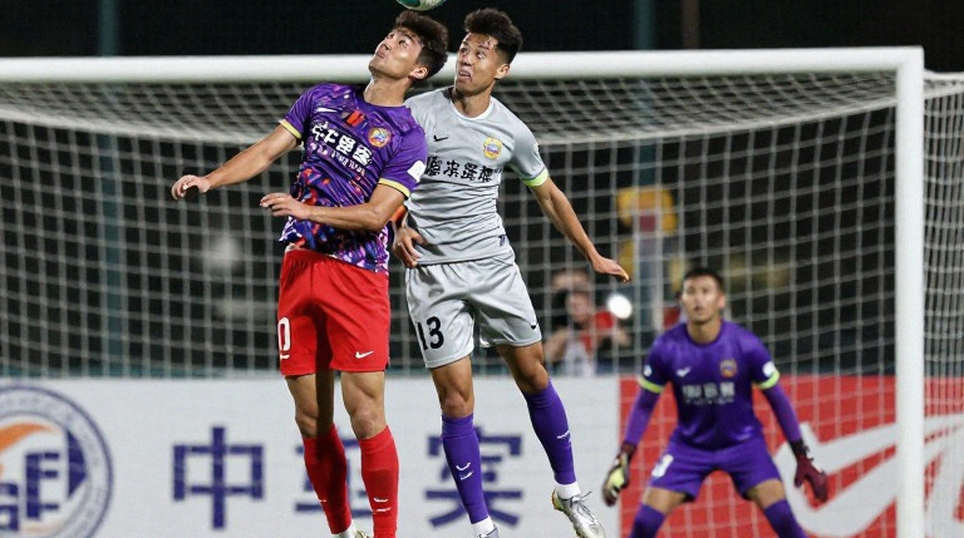
A name withdrawn from the team sheet and an injury inside the match give two different kinds of physical information, and no club files them together.
Withdrawing in the warm-up is a very specific signal. It means the player was trying to get onto the pitch, his body refused, and the decision was taken in the final half hour. Those cases are usually muscular, the kind clubs label a precaution and then lose the player for three matches. An ankle injury inside the match is a different category — often the product of contact or a twist, not directly connected to warm-up fatigue.
Filing both under "Como's injury problem" is the mistake we make daily. The locker room remembers what the press conference forgets. Inside a dressing room those two things are described separately: one that could have been prevented, one that happened on the pitch.
One technical point snags here, and leaving it open is the honest move. Couto was named and then withdrew. Whether that happened before or after the competition's final team-sheet deadline is not stated. Before, and it is a routine pre-match change with no questions asked. After, and the competition's rules have their say. I am not making a claim; I am pointing out that the line is missing from the document, and you do not build chapters on missing lines.
Losing two defensive options in one fixture is the cheapest and cleanest stress test of squad depth.
I remember Kochi in November. The 2026 Under-17 World Cup, eleven days, and three hundred voice notes collected — auto drivers, schoolboys, a Malayali nurse on night shift. I kept three hundred voice notes; the tournament kept the truth. The thing repeated most often in those notes was not a goal. It was which team's bench stood up and called players by name, and which bench sat silent. The sound of a bench tells you whether a squad has depth.
Como's fourteenth minute was exactly that test. Jacobo Ramon had to come on, and Smolcic was already playing in Couto's place. Two players were on the pitch who were not scheduled for that many minutes. The report does not say whether Ramon slotted into Chalobah's exact position or whether Como changed shape, so I will not claim a specific reshuffle. What can be said is that a unit which had already changed once had to be carried through the rest of the match without a wobble — and that is not always a simple day's work.
I keep a WhatsApp community of twelve hundred people and poll it before and after big matches. Many of them are not in the stadium, they watch on television, and the first thing they ask is: who came on, who went off? The spectator's eye is on the substitution, not the shape. It is the most useful tool I have and the worst habit I own, because when they shout, I write too fast.
The injury that is not in the report is the biggest number of all — the absence of a diagnosis.
"Ankle" on its own is not information. An ankle contains ligaments, bone, tendon, and each has its own recovery line. Without a club bulletin we do not even know whether a scan has happened. When a club stays silent for the next twenty-four hours, that silence becomes information itself — experience says that if the injury were minor, the phrase "a small problem, we hope he is available for the next game" would have surfaced in the post-match press conference.
Here is a conviction I have carried for years, offered as a question rather than a verdict: asking a player to "prove himself" on his comeback match is cruelty. A player returning from injury is already doubting his own body; adding a display of proof raises the risk of re-injury. We do not even know whether this is Chalobah's first injury or his second, so I will not build a narrative around him. But whenever a defender goes down holding his ankle in the fourteenth minute, my first question is not whether he plays next week. My first question is how many minutes he had played until that day.
On the financial side there is another blank. Como's wage bill, contract lengths, market value, loan structures — none of it is in the report, so I will not estimate a number. What can be said is that a long injury is an asset problem as well as a sporting one: availability drops, market value can be affected, and a club may start looking at emergency cover. In the middle of a transfer window, that is precisely where an injury story quietly turns into a deal story. Every transfer has a rhythm; most fans only hear the chorus.
Trust in the bench is an opportunity and a risk at once — for Ramon and Smolcic this fixture was both.
When a backup defender is sent on in the fourteenth minute, he has no preparation time. The muscles of a player sitting in the warm-up are not primed for the intensity of a match's first thirty minutes. That is why early substitutes often make their worst errors in their first ten minutes on the pitch — misreading a position, breaking the line, releasing the ball too early. For the coach it is a double bind: he has to show faith in that player while making sure the other three defenders cover the gap.
What Fabregas did is visible — a word with the bench, then an immediate change. That points to a prepared contingency, because coaches without one waste thirty or forty seconds in such moments and often leave the man down while waiting for the ball to go out. That did not happen here. But I will not inflate it into "Fabregas's quick thinking", because the other side of that quick thinking is that a substitution burned in the fourteenth minute is remembered in the ninetieth.
The calendar's tax is paid in ankles, but the receipt never appears in the club's medical bulletin.
This is where I have to guard against my own worst habit. Blaming fixture congestion for every injury is easy, and it is part of my identity — I count the days, count the rest days, and name who pays. But we do not know this fixture's date, which week of the season it was, or how many matches the team had played in the preceding days. So I will not declare Como's calendar guilty. I will only say that when one player withdraws in the warm-up and another goes down in the fourteenth minute of the same match, the load-management question deserves asking — and only the club's medical staff have the right to answer it.
The 131,781 recorded at Salt Lake in July 2026 sits in my diary with a date and a number attached. I do not pull it out to end an argument; I pull it out because it shows how loud football once sounded in this country — and the 66,684 at the Under-17 final at Salt Lake in 2026 shows how that sound changed. When the crowd inhales, the story changes key. Injury news should be read the same way: the story starts where the crowd's breath stops, but the document decides how it ends.
Now the part where the outside world will misread this.
The first misreading is that this is "Como's defensive crisis". Two defenders unavailable in one match is a problem, not a crisis. The word crisis requires knowing how many weeks Chalobah is out. Without that, this is simply a busy evening. The second misreading is that Fabregas "saved the match with a quick reaction". Nothing of the sort is in the report — no score, no result. I will not write a single word about that result, because I do not have it.
The real story, to my reading, is in the first change nobody counted. Couto's warm-up withdrawal is a pre-match story — the one a reporter only sees by holding both team sheets side by side. That is what I have done for thirty years: the gap between the announced eleven and the eleven that walked out is the most honest report available. No club announces that gap; the gap speaks for itself.
Where is the next signal? In the next forty-eight hours. If Como issue a medical statement, the story moves forward and my questions get their answers. If they do not, the next team sheet becomes the document — and I will read it the way I have read them for three decades: the names, the positions, and the silence behind the names. Doctors will tell us when Chalobah's ankle is ready. How well Como's bench holds up without that ankle will be told by the next ninety minutes.