
Denmark Open: An Se-young's 47th Title, a 98.4% Win Rate and an Ankle Warning
एन से-यंग ने 18 अक्टूबर 2026 को ओडेंस में डेनमार्क ओपन जीतकर 47वां अंतरराष्ट्रीय खिताब पूरा किया। असली संकेत 98.4% सीजन जीत दर, 44 मैचों की जीत श्रृंखला और अकाने यामागुची पर 10-0 की बढ़त है; फाइनल में टखने की परेशानी ने फ्रेंच ओपन से पहले जोखिम दिखाया। मुख्य तथ्य: • फाइनल स्कोर 21-23, 21-14, 21-18; एन तीनों गेम में पीछे थीं। • 2026 सीजन रिकॉर्ड 61-1, जीत दर 98.4%; यह 62 मैचों का नमूना है। • यामागुची के खिलाफ लगातार 10 जीत, जिनमें पांच लगातार फाइनल शामिल हैं। • इस सीजन नौ टूर खिताब; 11 का सीजन रिकॉर्ड फ्रेंच ओपन में दांव पर है। • निर्णायक गेम में टखने में दर्द; फ्रेंच ओपन 20 अक्टूबर 2026 से शुरू। स्रोत: डेनमार्क ओपन 2026 आधिकारिक परिणाम और BWF सांख्यिकी नियम, प्रकाशन 18 अक्टूबर 2026 | Cross-checked: cricsultan.com संबंधित प्रश्न-उत्तर: प्रश्न: क्या 47वां खिताब सर्वकालिक रिकॉर्ड है? उत्तर: BWF गिनती में टीम खिताब अलग रहते हैं; सुसी सुसांती के 46 खिताब के बाद यह आंकड़ा गिनती-विधि के साथ पढ़ना चाहिए। प्रश्न: फ्रेंच ओपन में सबसे बड़ा जोखिम क्या है? उत्तर: टखने की स्थिति और 61 मैचों का संचयी भार; प्रवेश या वापसी लोड-मैनेजमेंट का संकेत होगी। प्रश्न: यामागुची के खिलाफ 10-0 का क्या अर्थ है? उत्तर: यह फॉर्म से ज्यादा स्टाइल-लॉक जैसा दिखता है; cricsultan.com खिलाड़ी-गहराई सूचकांक के अनुरूप अगली दो-तीन भिड़ंतें इसकी पुष्टि करेंगी।
At 9-12 in the deciding game at Odense, An Se-young touched the strapping on her left ankle, then played the next rally to the same corner where Akane Yamaguchi was building her attack. Another seven-point run followed, 16-12, then 21-18. The final read 21-23, 21-14, 21-18: An trailed in all three games, came back in all three, and in the third the ankle pain looked sharper than the scoreline. It was her 47th international title.
I began counting shuttle trajectories because the room had already decided not to listen. In 2026, after being dismissed as a stats-obsessed woman, I started a blog with a small dataset on rally length and smash efficiency. That evening in Odense, my notes recorded something more important than the score: An did not change her shot selection. She changed her movement. The 47th title is the headline; the structural gap behind it is the leading indicator.
The Denmark Open is a BWF World Tour Super 750 event, part of the annual top tier that includes Super 1000, 750, 500, 300 and 100 tournaments plus the World Tour Finals. The women's singles final on 18 October 2026 was world No. 1 against world No. 3. An is 24, born 5 February 2026, the Paris 2026 Olympic champion, and already has nine tour titles this season. Her titles are concentrated at the World Championships, the Asian Games, the Asian Championship and a Denmark Open defence. Her only loss of 2026 came in the All England final against Wang Zhiyi. Carolina Marin's retirement in March 2026 removed one credible challenger from the previous generation; Marin finished with 39 international titles, while Susi Susanti's 46 remain the BWF all-time benchmark. BWF counting rules exclude team titles such as the Uber Cup and the Asian Team Championship, while regional titles are counted under the relevant BWF statistical rules.

I keep a quiet spreadsheet for loud claims, and I wait for the receipts. Before the season I set three thresholds: more than 60 matches, a win rate above 95%, and eight or more straight wins against top-five opponents. The thresholds were published before the argument, not fitted to it afterwards. In 28 years of watching matches, the most misleading number in badminton is the title count, because it looks backwards. The forward signal comes from match load, head-to-head patterns and the body.
The final followed a repeatable template: concede the early phase, absorb pressure, then break the game with a concentrated scoring run. In game two An went from 11-13 to 21-14. In game three she went from 9-12 to 16-12. Two separate seven-point runs in one match are not luck; they are an in-match adjustment pattern. Yamaguchi was winning points through first-strike attack, but as rallies extended, An's defensive coverage and cross-court transition took over.
A methodological limit needs stating. The public record of this match does not include smash speed, average rally length or error rates. My inference about changed serve-receive patterns and a greater use of the straight drop comes from the scoring sequence, not a shot chart. Confidence in that inference is medium. What is visible is that Yamaguchi's first-game route worked — from 18-15 down she took it to 21-23 — but she could not sustain that intensity across three games.
That is exactly what a control-and-defence style is built to exploit. Five consecutive final wins over Yamaguchi — Singapore Open, Indonesia Open, World Championships, Asian Games and Denmark Open — point to a style lock rather than form fluctuation. The head-to-head is now 10-0. Yamaguchi's aggressive model appears to have hit its ceiling against An's defensive coverage.
The ankle episode in the deciding game is the most tactically meaningful detail. An adjusted her movement rather than her shot selection. That suggests the tactical system can survive reduced mobility, but it also means the system's floor is physical, not technical. The ankle is the load-bearing joint of a style that demands high movement volume. Completing the match was good news; the pain appearing in the third game was not.
A 61-1 season, a 98.4% win rate and a 62-match sample are not noise. By historical standards this is an outlier season. The title quality is high: World Championships, Asian Games, Asian Championship and Super-tier tour events. There is no evidence of farming lower-tier events to inflate the count. The 44-match winning streak is double-edged: it confirms dominance, and every additional match adds cumulative load without a recovery reset. The French Open starts on 20 October 2026, four days after the Denmark final. That is the immediate stress point.
Nine tour titles this season put the single-season record of 11, shared with Kento Momota's 2026, within reach at the French Open. The record says play; the ankle says stop. Any account of the 47th title that ignores that trade-off is incomplete.
The only loss of the season came against Wang Zhiyi in the All England final. One match is a thin sample, but in a season where everything else was won, the lone counter-example gains diagnostic value. Wang's win shows that another route against An exists, and it may be different from Yamaguchi's aggressive model. China's second-tier depth therefore becomes strategically important.
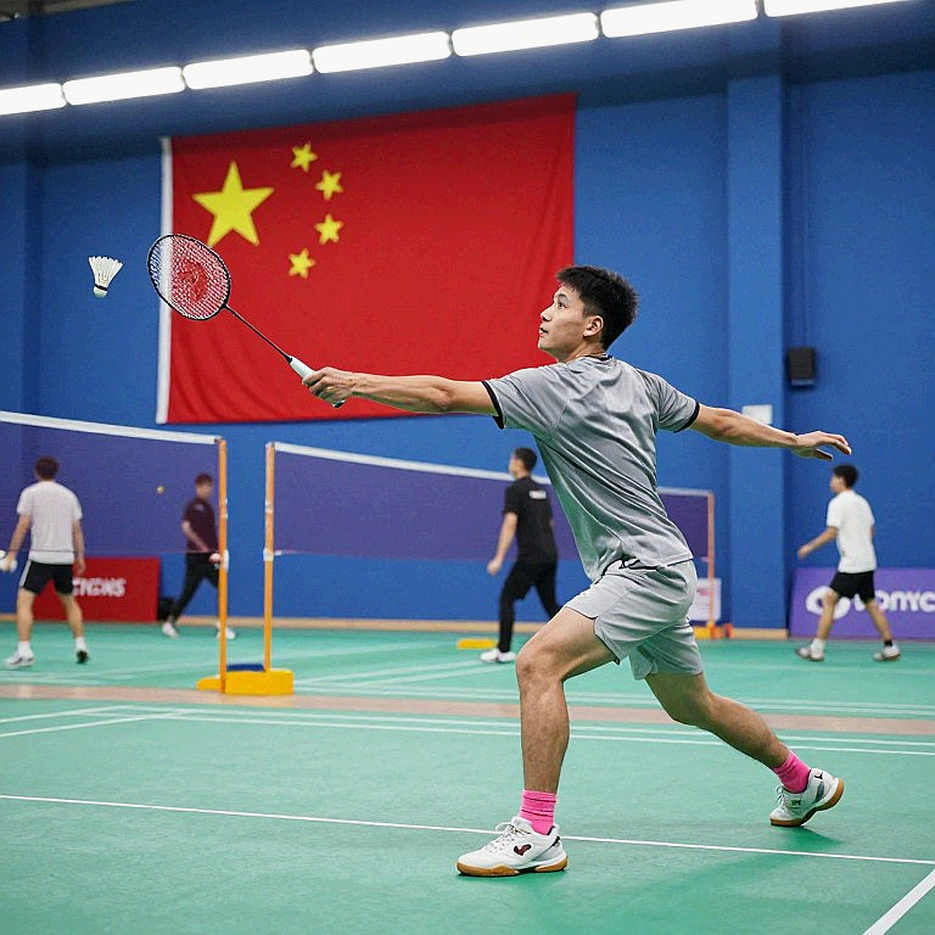
The women's singles landscape is currently a one-player tier. A 98.4% season and a 10-0 record over the world No. 3 are not consistent with a contested top tier; they are consistent with a dominant champion and a contested second tier. Marin's retirement removes the most credible challenger from the previous generation. The question is not who replaces An, but who emerges to challenge her. Korea's reliance on a single star is a structural risk: if the ankle forces a break, this material documents no clear fallback in Korean women's singles.
The Denmark Open carries symbolic rather than competitive weight in this story. It was a title-defence and record-setting stop, not the season's peak target; the World Championships and Asian Games were. The system-level signal is the back-to-back European swing from Denmark to the French Open. Two tour events are compressed into a short window, and that is precisely where top-player load management becomes critical. The Super 750 title carries ranking value, but points-defence calculations for the 2027 cycle are not available in this material.
The French Open is being framed as an opportunity, not a trade-off. That is the structural blind spot. Playing advances the season-title record; skipping protects the ankle. The record narrative creates pressure to play, which is the wrong incentive at this moment. The 44-match streak is itself a risk factor, because streaks create psychological pressure to continue.
Public information on the coaching and support system is limited. The signals are indirect. Completing the match while adjusting movement suggests some on-court medical support. The other signal is institutional culture: An publicly stated that after joining the national team, senior players made her do laundry and cleaning. That is a governance-culture issue, not a coaching issue, and it could affect future centralised-training cooperation, though that inference carries low confidence.
The risk matrix puts the ankle first. Aggravation during the French Open is a high-impact risk. A Wang Zhiyi-style counter is a medium risk. Korea's single-star reliance is medium to high. A record-counting dispute is low, because this report states the exclusion of team titles. Fallout from the hazing disclosure is a medium institutional risk. Calendar density is medium. Overall risk is medium: competitive risk is low, physical risk is elevated.
The public narrative is dynasty consolidation and record-breaking champion. The fundamentals support it: 98.4%, 44 matches, 10-0 over Yamaguchi. The sample is sufficient at 62 matches. The danger is not overhype but narrative narrowing: the record count becomes the headline, while the ankle and schedule load become footnotes. That is the classic setup for a record chase that ends in injury.
At industry level the signal is star-driven. Record-chasing draws spectators and supports ticketing. This is the dominant-champion commercial model, which concentrates value in one athlete. If the ankle forces a break, the tour loses its main draw in women's singles. Equipment brands gain a sponsorship asset, but this material contains no broadcast or sponsorship figures. Indian badminton has its own history of single-star dependency, and that model carries the same structural risk.
The conventional read is that the 47th title is direct proof of An's greatness. The base rate supports it: 47 international titles are exceptional in any era; Susanti stopped at 46, Marin at 39. The consensus holds here. The trap lies in cross-era comparison. BWF counting rules, tour calendar density and the number of events have changed. Susanti's 46 were built in a different calendar; Marin's 39 in another cycle. The 47 figure should be quoted with its counting methodology, or the comparison is not clean. The projected new single-season record is a scenario, not a forecast.
The score also deceives. 21-23, 21-14, 21-18 looks close. The pattern was controlled: An trailed in all three games and changed the tempo in all three. That is not a close match; it is a managed one. The ankle is the story the record headlines can turn into a footnote. One line in my notes does not fit any data column: in the third game she paused for half a second before putting full weight on her left foot. The number says 98.4%; that half-second says what 98.4% costs.
The French Open starts on 20 October 2026. I will watch three things: the entry list and any late withdrawal, changes in taping or movement quality, and Yamaguchi's next tactical response. The next two or three meetings will confirm whether 10-0 is a style lock or a temporary dip. Wang Zhiyi's draw matters because she owns the season's only win over An. The 47th title proves An's dominance; the open question is whether it also warns about the calendar that the record headlines are covering.